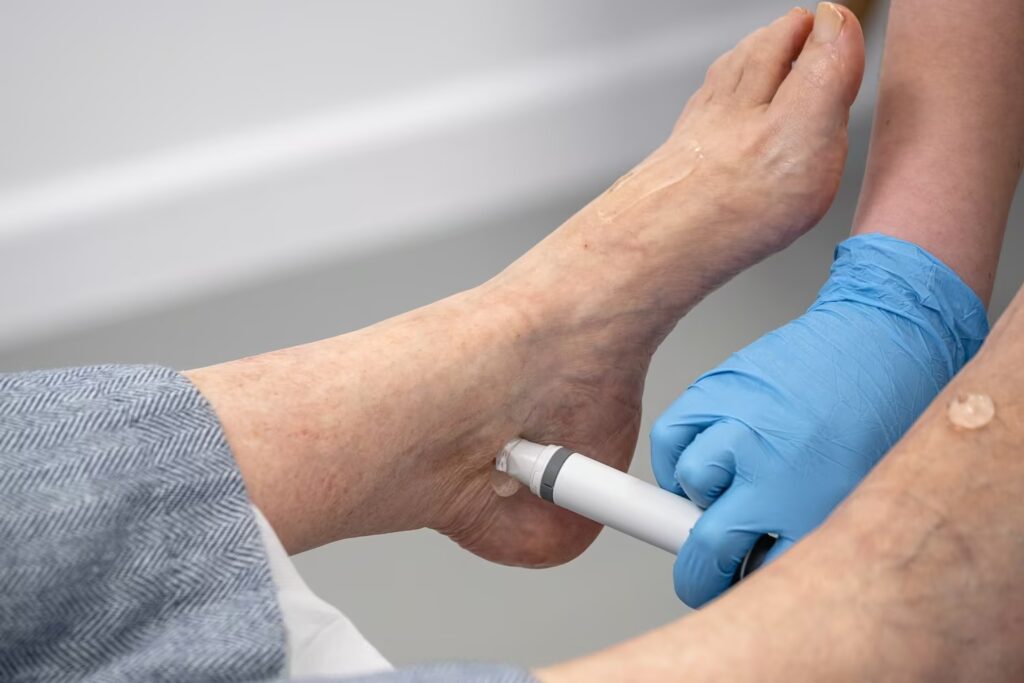
Diabetes, among some other health conditions, can damage the nerve endings and blood supply in the feet, making them vulnerable to damage and slow to heal.
In particular high pressure areas on the foot can easily ulcerate. Diabetes wound care accounts for approximately £1billion pounds of NHS spending every year. With the rate of amputation in diabetes being high, and the mortality rate following amputation sadly being only 5 years, wouldn’t it be amazing if we can prevent more ulcers from happening?
Well, we can! With careful and thorough screening of blood supply, nerve function and identifying high pressure areas early on, we can reduce the risk of ulceration and keep people out of hospital and living well.
Podiatrists are the best placed to identify high-risk areas, guide safe footwear selection, maintain healthy skin and treat lesions and offer general wellbeing advice. With our Footscan pressure analysis system we can easily visualise high loading areas, and take steps to alleviate before there is even harm generated. We can assess shoe influence on loading patterns, and create bespoke orthoses as a result.